How it Works
The core Comimant package runs on Node.js, and allows HTTP clients to connect and access the resources on the intranet site running on Comimant.
Comimant can be paired with servers running Comimant Server, to retrieve information such as disk usage and other information. Comimant Server can run on the same server as Comimant.
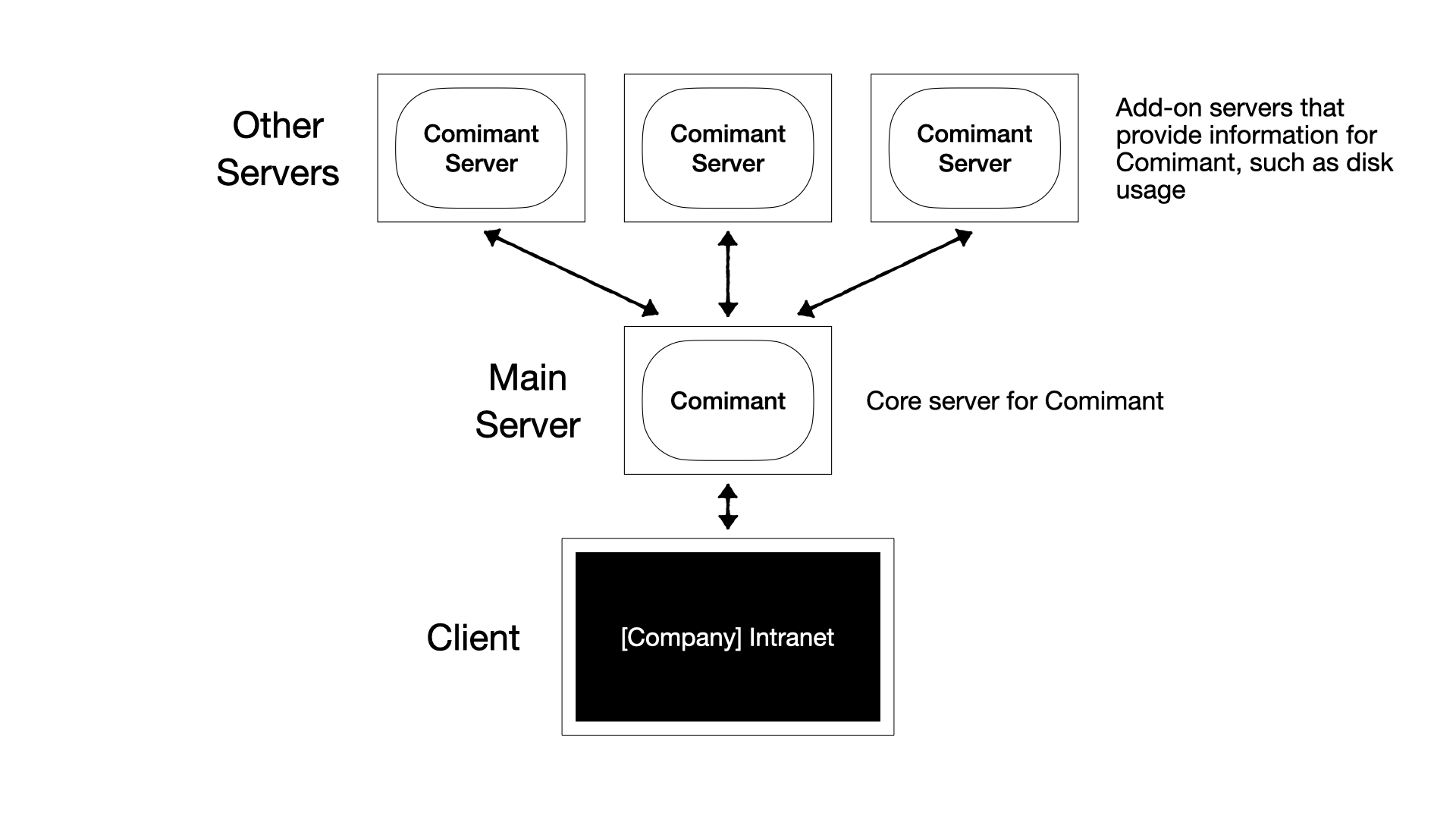
Comimant can run on a single thread (PM2 fork mode), or on multiple threads simultaneously (PM2 cluster mode). Because of this multi thread support, Comimant has to use a Redis memory cache to make sure state data is the same across all server instances/threads. More details on this is available on the multi-threading page of the Plugin documentation.
Comimant also relies on a MySQL database to store long-term data, such as user details.
Comimant Server is written in Go, and uses the Comimant Protocol to transfer information to and from Comimant.
Plugins
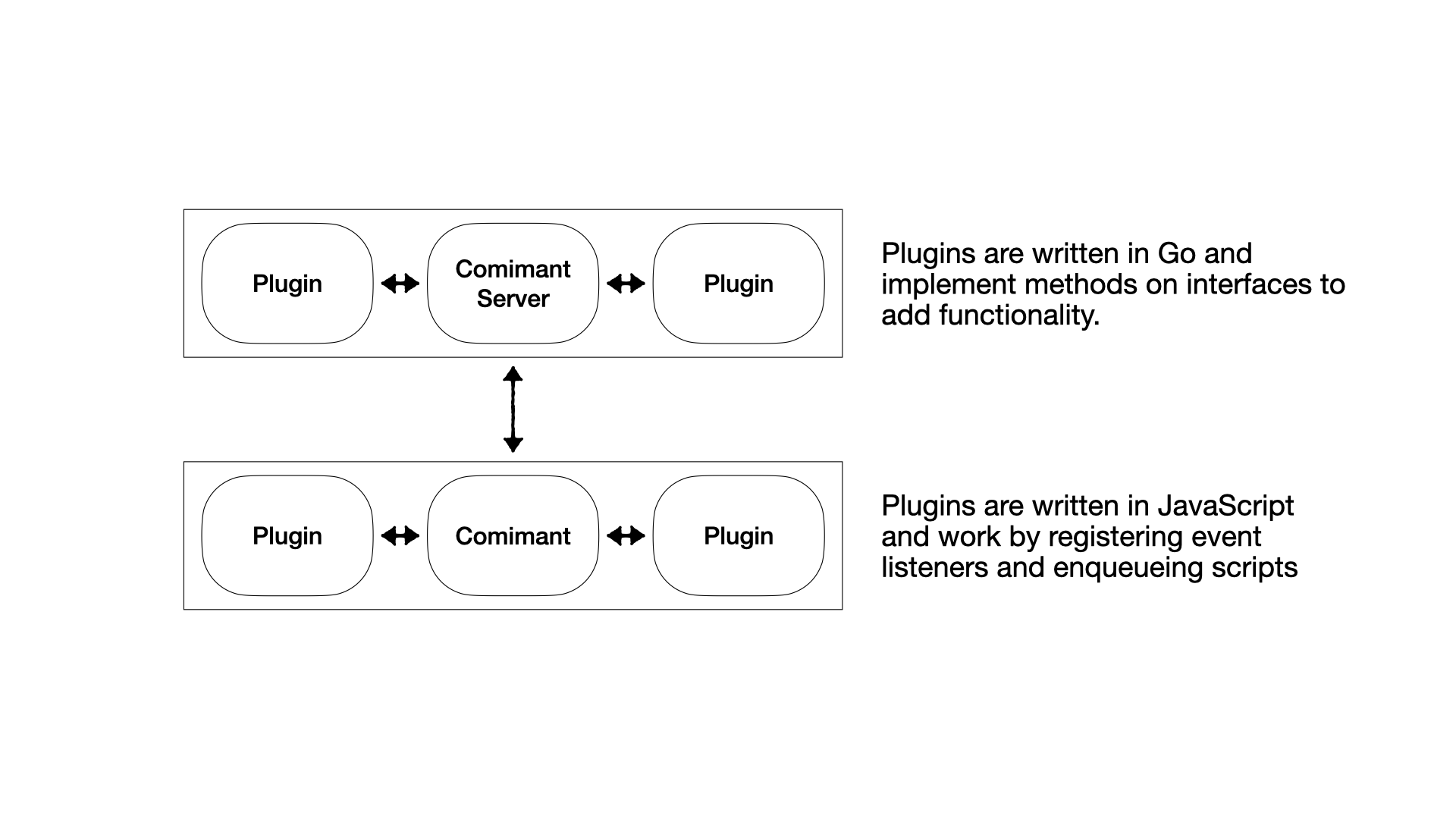
Both Comimant and Comimant Server support plugins to add additional functionality.
Comimant plugins are written in JavaScript and work by registering event listeners and enqueueing scripts.
Comimant Server plugins are written in Go and are compiled as a shared object library.
The Comimant Protocol
The Comimant Protocol is a fully encrypted secure protocol used to transfer messages and files between Comimant and Comimant Server.
For more details, see The Comimant Protocol.